The Rise of Cleaning Drones in the U.S. Cleaning Service Industry: Revolutionizing High-Rise Maintenance
The Rise of Cleaning Drones in the U.S. Cleaning Service Industry: Revolutionizing High-Rise Maintenance
In the ever-evolving world of technology, drones have made significant strides across various industries, from agriculture and surveillance to delivery services. One of the latest applications of drone technology is in the cleaning service industry in the United States, where cleaning drones are beginning to play a crucial role, particularly in the maintenance of high-rise buildings. These specialized drones are equipped with advanced features that allow them to perform tasks that were once labor-intensive, time-consuming, and even dangerous. This article explores the capabilities of cleaning drones, their operational mechanisms, and the advantages they offer over traditional manual cleaning methods.
The Technology Behind Cleaning Drones
Cleaning drones are sophisticated machines designed to tackle the challenging task of cleaning tall structures. Unlike regular drones, these cleaning drones are equipped with a tethered high-pressure water system, which provides them with the necessary cleaning power to remove dirt, grime, and debris from building surfaces. The key components of these drones include:
- Tethered High-Pressure Water Supply: Cleaning drones use a ground-based high-pressure pump that operates at 3200 PSI, providing a consistent flow of water to the drone through a high-pressure, explosion-proof hose. This hose can be up to 150 meters in length, allowing the drone to reach heights of up to 150 meters (approximately 492 feet). This capability is particularly useful for cleaning the facades of skyscrapers and other tall structures.
- Foam Detergent Spraying: In addition to water, these drones can also spray foam detergents onto surfaces, making it easier to clean stubborn stains and contaminants. The foam clings to the surface, breaking down dirt and grease before being washed away by the high-pressure water.
- Obstacle Detection Radar: Safety is a major concern when operating drones near buildings. To prevent collisions, cleaning drones are equipped with forward-facing obstacle detection radar. This radar system continuously scans the environment, detecting obstacles such as walls, ledges, and other protrusions, and automatically adjusting the drone’s flight path to avoid contact.
- High-Resolution Camera: A 1080P high-definition camera mounted on the drone provides real-time video feedback to the operator. This live feed is displayed on the controller’s large screen, allowing the operator to monitor the cleaning process closely and ensure that all areas are thoroughly cleaned.
- Battery Life: Cleaning drones are powered by high-capacity batteries that provide up to 25 minutes of flight time per charge. This allows for efficient cleaning sessions, especially when the drone is used in rotation with multiple batteries for continuous operation.
Advantages of Cleaning Drones Over Traditional Methods
The introduction of cleaning drones into the U.S. cleaning service industry offers several significant advantages over traditional manual cleaning methods. These benefits not only improve the efficiency of cleaning operations but also enhance safety, reduce costs, and expand the scope of services that cleaning companies can offer.
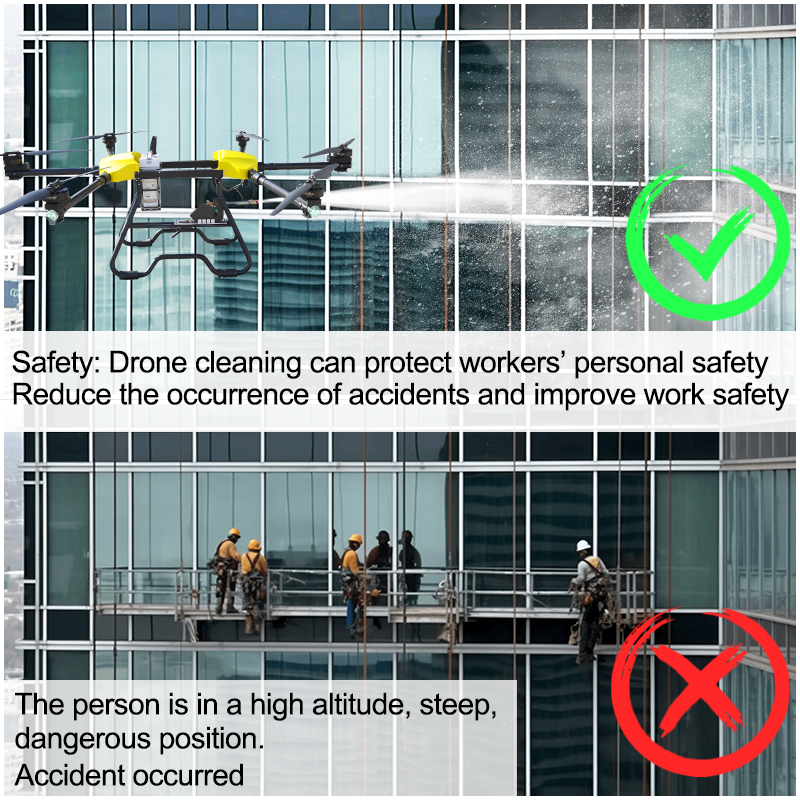
- Safety and Risk Reduction: One of the most significant advantages of cleaning drones is the reduction of safety risks associated with high-rise cleaning. Traditionally, cleaning the exteriors of tall buildings required workers to use scaffolding, ropes, or suspended platforms, all of which involve significant risk. Accidents such as falls from heights are a constant concern in these operations. By using drones, workers remain safely on the ground, controlling the drone remotely while it performs the cleaning tasks at height. This approach minimizes the risk of injury and improves overall safety standards in the industry.
- Increased Efficiency and Speed: Cleaning drones can cover large areas in a short amount of time, making them much more efficient than manual cleaning methods. The high-pressure water system, combined with the drone’s mobility, allows for quick and thorough cleaning of building exteriors. In contrast, traditional methods require more time to set up equipment and to manually clean each section of the building. Drones can easily maneuver around structures, reaching difficult areas without the need for complex rigging or scaffolding.
- Cost-Effectiveness: The operational costs of using cleaning drones are significantly lower than traditional methods. Manual cleaning often requires a team of workers, safety equipment, and time-consuming setup processes, all of which add to the overall cost of the service. Drones, on the other hand, require fewer personnel and less time to complete the same tasks, resulting in lower labor costs. Additionally, the reduced need for scaffolding and other equipment further cuts down on expenses.
- Access to Hard-to-Reach Areas: Cleaning drones excel in accessing areas that are difficult or impossible to reach using traditional methods. Their ability to fly up to 150 meters with a high-pressure water hose allows them to clean tall buildings, bridges, and other structures without the need for extensive rigging. This capability is especially useful for cleaning complex architectural features, underpasses, and other locations where manual access is limited or hazardous.
- Consistent and Thorough Cleaning: The real-time video feedback provided by the drone’s high-resolution camera allows operators to monitor the cleaning process closely. This ensures that all areas are cleaned to a high standard, with no missed spots or incomplete sections. The ability to spray foam detergents also enhances the cleaning effectiveness, particularly on surfaces that have accumulated significant grime or pollutants.
- Environmentally Friendly Operations: Cleaning drones can be more environmentally friendly than traditional methods. The high-pressure water system is efficient in removing dirt and contaminants with less water usage than manual cleaning. Additionally, the use of drones reduces the need for chemical-based cleaning solutions, as the high pressure and foam detergents are often sufficient to achieve the desired results. This reduction in chemical usage helps minimize environmental impact and aligns with sustainable cleaning practices.
- Flexibility and Adaptability: Cleaning drones are highly versatile and can be adapted to various cleaning tasks. Whether it’s washing windows, removing dirt from building facades, or even cleaning solar panels, these drones can be equipped with different nozzles and attachments to suit the specific requirements of the job. Their adaptability makes them a valuable tool for cleaning companies looking to expand their service offerings and cater to a wider range of clients.
Cleaning Drones in the U.S. Cleaning Service Industry
Conclusion: The Future of Cleaning Services
As the cleaning service industry in the United States continues to evolve, the adoption of cleaning drones represents a significant step forward. These drones offer a safer, more efficient, and cost-effective alternative to traditional high-rise cleaning methods, making them an increasingly popular choice for cleaning companies. Their ability to operate in challenging environments, combined with advanced features such as obstacle detection and real-time video monitoring, ensures that they deliver consistent and high-quality results.
In the coming years, we can expect to see further advancements in cleaning drone technology, including longer battery life, more powerful cleaning systems, and even greater automation. As these technologies continue to develop, cleaning drones are likely to become a standard tool in the industry, helping to shape the future of high-rise maintenance and beyond. The integration of cleaning drones into the cleaning service industry not only enhances operational efficiency but also sets a new benchmark for safety and sustainability in high-rise cleaning.
More detailed price info will be provided if interested. Pls contact by
WhatsApp +86 18053626824 (Sophie Liu) or by link: https://wa.me/8618053626824
E-mail: 807@joyancetech.com
Official website: https://www.joyancetech.cn/