
Revolutionizing the Cleaning Service Industry: The Rise of Washing Drones in the United States
In recent years, technological advancements have led to significant shifts across various industries, and the cleaning services sector in the United States is no exception. With the introduction of washing drones, businesses and consumers are witnessing a transformation in how high-altitude cleaning tasks are performed, making them safer, more efficient, and more cost-effective.
The Emergence of Washing Drones
Washing drones are specially designed aerial devices equipped with high-pressure water jets and precision controls. Unlike traditional methods, which often require scaffolding, ladders, or even professional climbers to clean high-rise buildings, these drones can reach heights effortlessly and perform tasks that were once deemed challenging or risky.
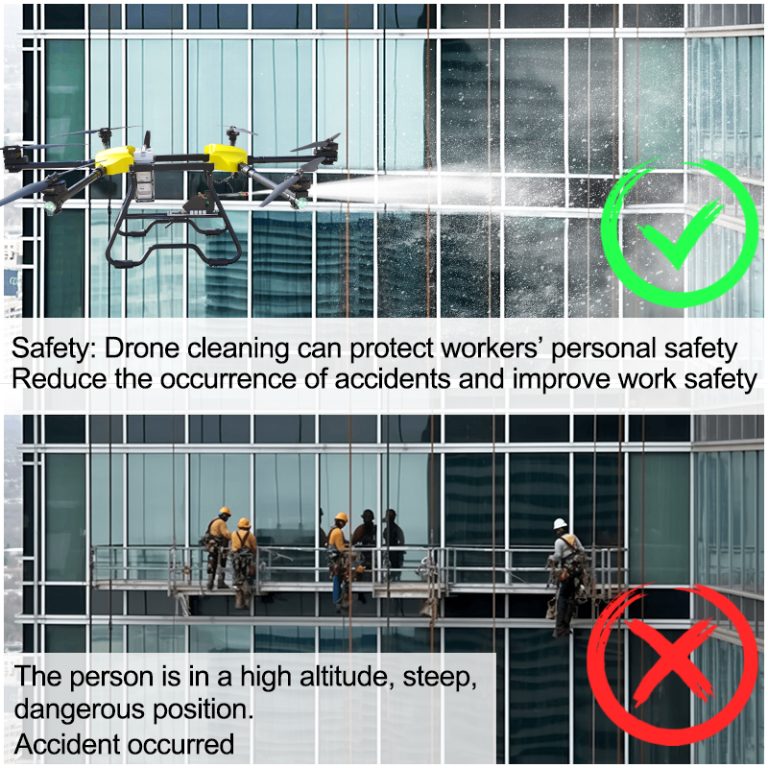
The image provided by an American customer showcases a drone hovering near the top of a tall building, effectively spraying water to clean the surface. This real-world application demonstrates the drone’s capability to deliver targeted cleaning in areas that are difficult to access by conventional means.
Transforming the Cleaning Landscape
The use of washing drones is gaining momentum in the U.S. cleaning services industry for several reasons:
- Enhanced Safety: Traditional high-altitude cleaning methods pose significant safety risks to workers. The use of drones eliminates the need for human presence in dangerous situations, reducing the likelihood of accidents and injuries. This is particularly crucial when dealing with skyscrapers, glass facades, or other challenging surfaces.
- Improved Efficiency: Washing drones can cover large surface areas quickly and efficiently. Their ability to maneuver around obstacles and reach tight spots allows them to perform tasks that would otherwise be time-consuming. This efficiency translates to shorter project durations and lower labor costs, making the service more attractive to clients.
- Cost-Effectiveness: While the initial investment in drone technology may seem substantial, the long-term benefits far outweigh the costs. Companies save on labor, equipment rentals, and insurance premiums, which are typically higher when human workers are involved in high-risk activities. Additionally, the reduced project time means less disruption to building occupants or business operations.
- Environmental Benefits: Washing drones often use less water than traditional cleaning methods. By focusing the water spray precisely where it’s needed, these drones minimize waste and reduce the environmental impact. This aspect is particularly appealing in regions where water conservation is a priority.
- Accessibility: Drones can easily access hard-to-reach areas such as building facades, windows, and roofs, making them ideal for a wide range of cleaning tasks. Whether it’s removing grime from a high-rise office building or cleaning solar panels on a rooftop, drones offer unparalleled versatility.
The Growing Demand for Drone-Based Cleaning Services
The adoption of washing drones is expanding rapidly across the United States, driven by the growing demand for efficient, safe, and cost-effective cleaning solutions. From commercial properties and residential buildings to industrial complexes, the applications of these drones are vast and varied.
For example, the image shared by our American client illustrates a drone effectively cleaning a high-rise building’s exterior. Such feedback is becoming increasingly common, as more businesses and property managers recognize the value of incorporating drones into their maintenance routines.
The trend is particularly noticeable in major metropolitan areas like New York, Chicago, and Los Angeles, where the density of tall buildings presents unique challenges for traditional cleaning methods. In these cities, washing drones are not only viewed as a tool for improving building aesthetics but also as a means of enhancing safety and operational efficiency.
Challenges and Future Outlook
While the benefits of washing drones are clear, there are still challenges to overcome before they become a standard tool in the cleaning industry. Regulatory hurdles, such as the need for permits and adherence to Federal Aviation Administration (FAA) guidelines, can pose obstacles for companies looking to adopt drone technology.
Additionally, concerns about privacy and data security must be addressed. Since drones are equipped with cameras and other sensors, there is a need to ensure that they do not infringe on the privacy of building occupants or nearby residents.
However, as technology continues to evolve and regulatory frameworks adapt, the use of washing drones is expected to grow. Innovations such as automated flight paths, improved battery life, and more powerful cleaning systems will further enhance the capabilities of these drones, making them an even more attractive option for service providers.
Conclusion
The introduction of washing drones represents a significant advancement in the U.S. cleaning services industry. By offering a safer, more efficient, and cost-effective solution for high-altitude cleaning tasks, these drones are set to become an integral part of modern building maintenance.
As the technology matures and becomes more widely accepted, we can expect to see even more innovative applications for washing drones. From routine building cleanings to emergency response situations, the potential uses are vast, and the benefits are undeniable. The future of the cleaning industry in the United States is airborne, and washing drones are leading the way.